
Short answer: Block paving suits people who want a classic look and easy repairs; resin-bound suits people who want a smooth, modern, weed-free finish; tarmac suits people who want a hard-wearing, practical surface over a large area. All three last well only when they are laid on a properly prepared base, so the quality of the groundwork matters more than the surface you pick.
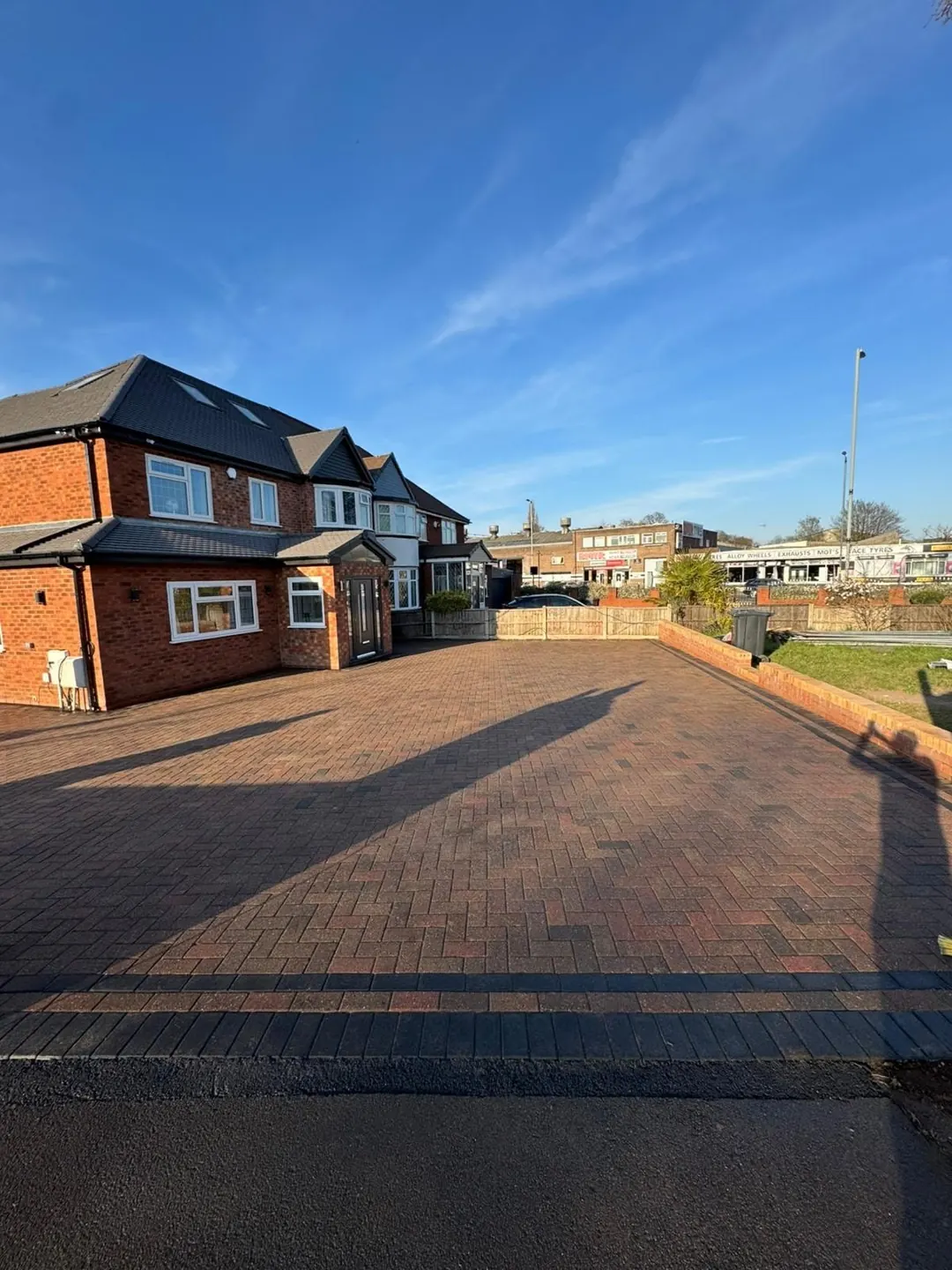
Block paving
Block paving is made of individual concrete or clay blocks laid on a bed of sand over a compacted sub-base, with sand brushed into the joints. It comes in many colours, textures and patterns, from simple stretcher bond to herringbone and borders. Herringbone is generally preferred for driveways because the interlock resists movement from turning tyres.
The main advantage is repair. If a patch sinks, or a utility company needs to dig up the drive, blocks can be lifted and relaid with little sign of the work. The downsides are that the joints can collect weeds and moss if they are not kept topped up, and oil stains can be harder to hide. Standard block paving is not permeable, but permeable block systems are available where drainage rules require them.
Resin-bound surfacing
Resin-bound driveways are made by mixing natural aggregate with a clear resin and trowelling it onto a suitable base to give a smooth, seamless finish. Laid correctly it is permeable, which helps with front-garden drainage rules, and there are no joints for weeds to root in.
It needs a stable, well-prepared base, often tarmac or concrete, and the work is weather-sensitive: resin should not be laid in rain or very cold conditions. Repairs are less invisible than with blocks, as patches can show a slight difference in colour. Resin-bound is not the same as resin-bonded, where stones are scattered onto a resin coat; that surface is not permeable and can shed loose stone.
Tarmac
Tarmac (asphalt) is laid hot and rolled to a dense, hard-wearing surface. It copes well with heavy use, is quick to install over large areas, and has a practical, uniform look. Edging in blocks or kerbs can add a smarter finish.
Standard tarmac is not permeable, so on a front garden it usually needs drainage directing water to a soft area or drain. It can soften slightly in very hot weather and may mark under sharp point loads, and it fades from black to grey over time. Patch repairs tend to be visible.
Side-by-side comparison
Looks: block paving offers the most patterns and colours; resin gives a smooth, modern finish; tarmac is plain and practical. Maintenance: resin and tarmac are simple to sweep; block paving benefits from occasional re-sanding and weed treatment. Repairs: block paving is easiest to repair invisibly. Drainage: resin-bound and permeable block paving let water through; standard blocks and tarmac need drainage planning.
Installation: tarmac is typically quickest on large areas, resin can be quick if a suitable base exists, and block paving takes longest because it is laid by hand. Our guide on how long driveways and patios take goes into timescales.
The base matters more than the surface
Whichever surface you choose, most driveway problems start underneath. Sinking, ruts, standing water and loose edges usually come from too shallow a dig, too little compacted stone, weak edging or poor drainage. When comparing quotes for different surfaces, ask each installer to describe the depth of excavation, the type and thickness of sub-base, how edges are restrained and where rainwater will go. A well-built base under a modest surface will outlast an expensive surface on a poor one.
How to choose
Think about how the drive will be used, how much upkeep you are happy with, the style of your house, and whether you need a permeable surface to avoid a planning application. Look at examples of each surface near you, ideally a few years old, to see how they wear. Then ask for quotes that set out the base construction, drainage and edging for each option.
We lay driveways across Worcestershire and can talk through the options for your home when we visit to quote.
Frequently asked questions
Which driveway surface needs the least maintenance?
Resin-bound and tarmac are the simplest to keep clean because there are no joints for weeds. Block paving needs occasional sweeping, weed treatment and re-sanding of joints.
Is resin-bound the same as resin-bonded?
No. Resin-bound mixes stone and resin together into a smooth, permeable surface. Resin-bonded scatters stone on top of a resin layer, is not permeable and can shed loose stones.
Which surface is easiest to repair?
Block paving, because individual blocks can be lifted and relaid. Repairs to resin and tarmac usually leave a visible patch.
Can a new surface go over my old tarmac?
Resin-bound can often be laid over sound existing tarmac or concrete. If the old surface is cracked, sunken or poorly drained, it needs replacing first.
Related services
More guides
- How Much Does a New Driveway Cost? What Drives the Price
- How Much Does a Patio Cost? The Factors That Set the Price
- Do You Need Planning Permission for a Driveway?
- How Long Does a New Driveway or Patio Take to Install?
- Dropped Kerbs: Cost Factors and How to Apply
- Porcelain vs Indian Sandstone Patio: Which Should You Choose?
- How Much Does a Plasterer Charge? What Affects the Price
- Landscaping Cost: What Sets the Price of a Garden Project
- Garden Wall Cost: What Affects the Price of a Brick Wall
- Repointing brickwork: a homeowner's guide
- Retaining walls for sloping gardens
- Driveway and patio drainage explained
- Planning garden steps and raised patios
- How long does new plaster take to dry?
- All guides
Related guides
- How Much Does a New Driveway Cost? What Drives the Price
- Do You Need Planning Permission for a Driveway?
- How Long Does a New Driveway or Patio Take to Install?
- Dropped Kerbs: Cost Factors and How to Apply