
Short answer: A thin skim coat dries much faster than a full replaster, because there is less water in it, while a deeper backing coat plus finish can take considerably longer. Drying time also depends on the season, heating and ventilation. New plaster is dry when it has changed from dark brown or pink to an even, pale colour all over with no darker patches. Only then should a diluted mist coat go on before normal painting.
Skim coat, full plaster and plasterboard
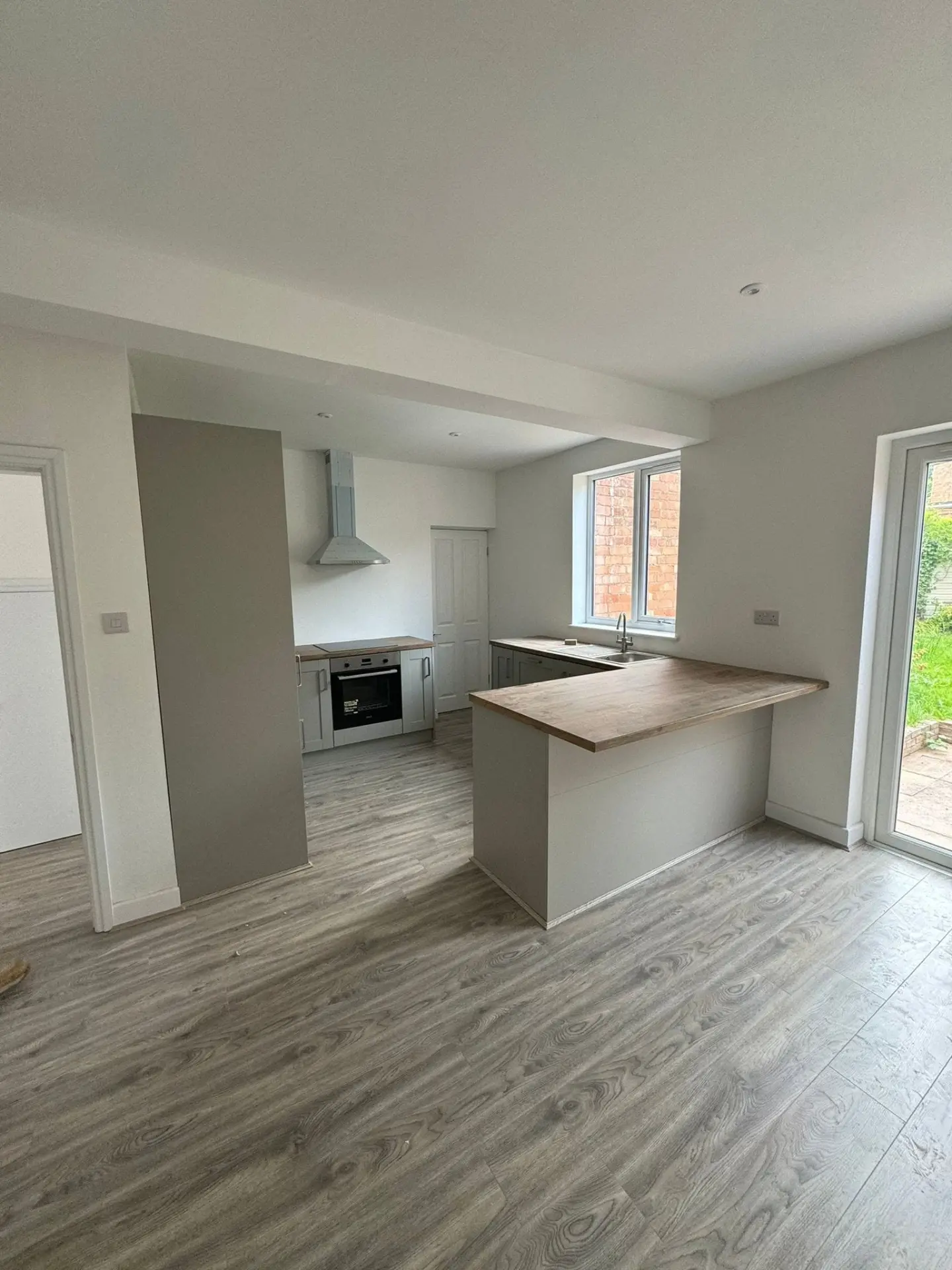
Not all plastering jobs are the same, and the type of work is the biggest single influence on drying time. A skim coat is a thin layer of finishing plaster applied over an existing wall or ceiling in reasonable condition, or over new plasterboard. Because it is thin, it holds relatively little water and dries comparatively quickly.
A full replaster is a different job. Old plaster is removed back to the brick or block, a thicker backing coat is applied to build out and level the wall, and a finish coat goes on top. That much greater thickness holds far more water, so it takes considerably longer to dry right through. New plasterboard that has been skimmed sits between the two: the board itself is dry, so only the skim has to dry out.
What affects drying
Thickness is the main factor, but conditions in the room make a big difference. Plaster dries by losing water to the air, so it dries faster in warm, well-ventilated rooms and much more slowly in cold, damp weather. Winter jobs routinely take longer than summer ones.
Ventilation is just as important as warmth. Opening windows and keeping doors ajar lets moist air escape; a sealed room soon becomes humid, and drying stalls. The background matters too: solid masonry walls, especially older ones, can hold moisture of their own. Areas around windows, corners and behind furniture often dry last because air movement there is lower.
How to tell plaster is dry
Fresh plaster is dark, usually a deep brown or pinkish brown depending on the product. As it dries it lightens to a pale, even pink. The clearest sign that a wall is ready is a uniform light colour over the whole surface with no darker patches. Those darker areas are still damp and will take a little longer.
Touch can help but is less reliable: dry plaster feels room temperature and smooth rather than cool. If in doubt, wait. Painting too early traps moisture, which can lead to flaking, blistering or mould behind the paint.
Mist coat and first paint
New plaster is very absorbent. If ordinary emulsion is rolled straight onto it, the plaster sucks moisture out of the paint, which then fails to bond properly and can peel. The answer is a mist coat: a water-based, non-vinyl matt emulsion thinned with water, following the paint maker's guidance on ratios.
The mist coat soaks in and seals the surface, giving a good key for the top coats. Once it is dry, apply normal emulsion as usual, typically in two coats. Avoid vinyl or wipeable paints for the mist coat, because they form a skin that stops the plaster breathing. Wallpaper needs similar care: the plaster should be fully dry and sized first, as wallpaper manufacturers advise.
What not to do
It is tempting to speed things up with fan heaters or by turning the heating right up. Forced, intense heat dries the surface far faster than the plaster underneath and can cause cracking, crazing or a weak, powdery finish. Gentle background warmth plus good ventilation is much better. Dehumidifiers can help in a closed room once the plaster has set, but use them moderately.
Do not seal the plaster too early with vinyl paints, tiles or wallpaper, and do not hang heavy items or push furniture tight against fresh walls. Give the room time and let it breathe.
Plastering versus skimming
People often use the two words interchangeably, but there is a difference. Skimming means applying a thin finishing coat over a sound surface to give a smooth, flat finish. Plastering, in the fuller sense, includes stripping old material and applying backing coats before the finish, usually because the existing plaster is loose, cracked or damaged.
Which one a room needs depends on the condition of the walls, and that affects both cost and drying time. Our guide to what a plasterer charges explains the price factors, and our interior plastering page covers the work we do. Plastering often follows other general building work, so it is worth planning the two together.
Frequently asked questions
Can I speed up plaster drying?
Yes, gently. Keep the room ventilated with windows open and use moderate background heat. Avoid fan heaters or blasting heat, which can crack the finish.
Why is my plaster drying patchy?
Uneven thickness, differences in the wall behind and areas with less air movement all dry at different rates. Darker patches are still damp; give them time.
When can I paint new plaster?
When it is an even pale colour all over with no darker patches. Start with a mist coat of thinned, non-vinyl matt emulsion, then apply normal paint.
What is the difference between plastering and skimming?
Skimming is a thin finish coat over a sound surface. Full plastering includes removing old plaster and applying backing coats before the finish.
Can I hang wallpaper on new plaster?
Yes, once it is fully dry and has been sized or primed as the wallpaper maker recommends, so the paste does not soak straight in.
Related services
More guides
- How Much Does a New Driveway Cost? What Drives the Price
- How Much Does a Patio Cost? The Factors That Set the Price
- Block Paving vs Resin vs Tarmac: Which Driveway Is Best?
- Do You Need Planning Permission for a Driveway?
- How Long Does a New Driveway or Patio Take to Install?
- Dropped Kerbs: Cost Factors and How to Apply
- Porcelain vs Indian Sandstone Patio: Which Should You Choose?
- How Much Does a Plasterer Charge? What Affects the Price
- Landscaping Cost: What Sets the Price of a Garden Project
- Garden Wall Cost: What Affects the Price of a Brick Wall
- Repointing brickwork: a homeowner's guide
- Retaining walls for sloping gardens
- Driveway and patio drainage explained
- Planning garden steps and raised patios
- All guides
Related guides
- How Much Does a Plasterer Charge? What Affects the Price
- Repointing brickwork: a homeowner's guide
- How Much Does a New Driveway Cost? What Drives the Price
- How Much Does a Patio Cost? The Factors That Set the Price