
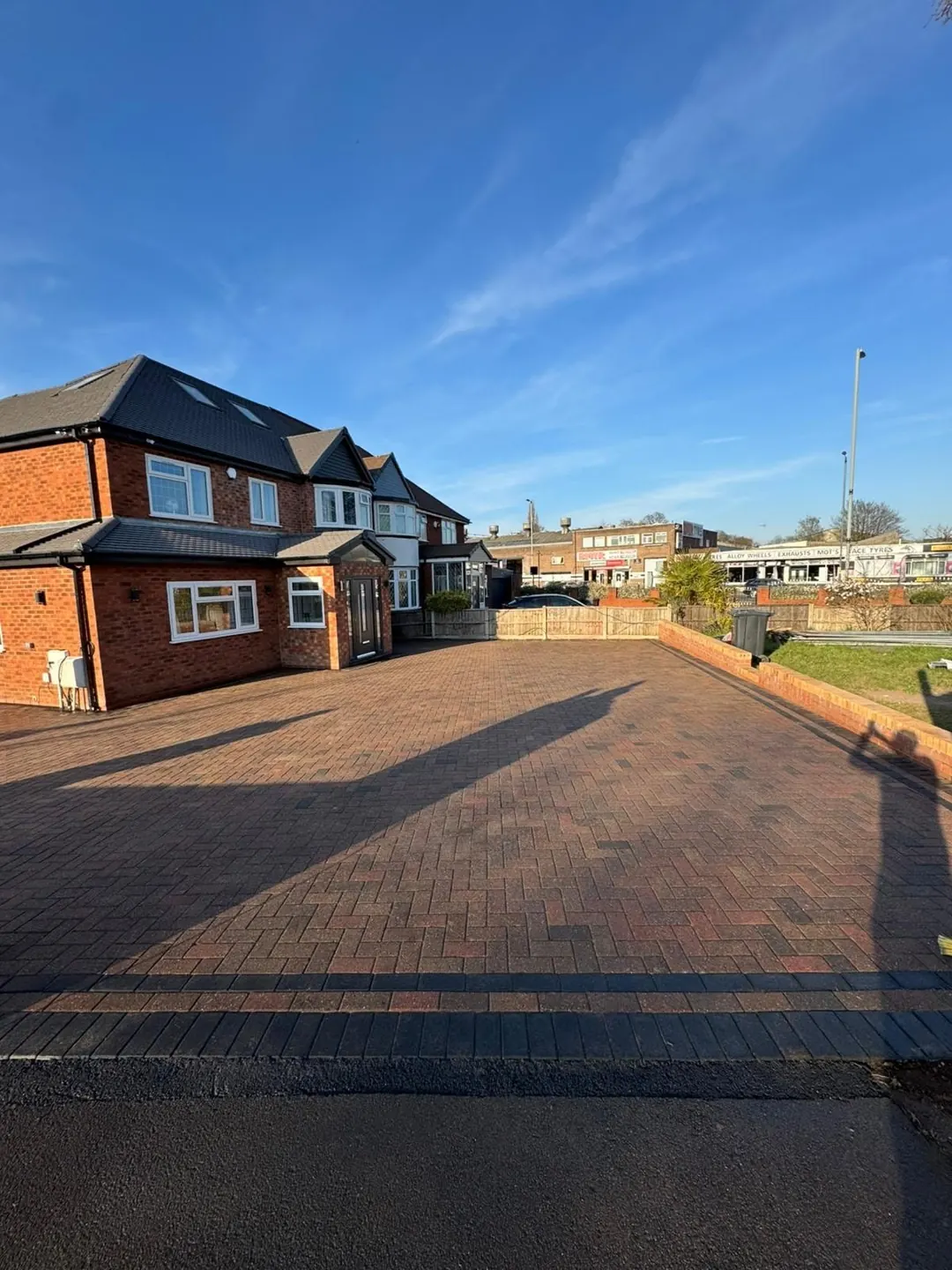
Short answer: A dropped kerb is the lowered section of pavement kerb that lets a car cross from the road to your driveway. You need permission from the highway authority before one is built, which in Worcestershire is the county council. The cost depends on the application and inspection fees, how many kerb stones need lowering, the condition of the footway, and whether services, trees or street furniture are in the way. The driveway behind it is a separate job and should be planned at the same time.
Why you need permission first
The pavement and kerb outside your home are part of the public highway, even if your property boundary runs right up to them. That means you cannot simply lower the kerb yourself or drive across the footway to reach a new parking space. Doing so can damage pipes and cables buried below the pavement, and it can lead to enforcement action from the council.
Applications are made to the highway authority. In Worcestershire that is Worcestershire County Council, and in Birmingham or Gloucestershire it is the relevant city or county council. Each authority sets its own process and criteria, so read the guidance for your area before you plan the driveway.
What the council looks at
Most authorities assess similar things. They check that there is enough depth between the house and the pavement for a car to park without overhanging the footway. They look at visibility for drivers pulling out, how close the crossing would be to a junction, a bus stop or a pedestrian crossing, and whether trees, lamp posts or utility boxes would have to be moved.
If the road is classified, or the property is listed or in a conservation area, planning permission may also be needed alongside the highway approval. The council's guidance will say when that applies.
It is worth measuring your front garden before you apply. A frontage that is too shallow for a car is one of the most common reasons for refusal, and finding that out early saves time and fees.
What decides the cost
There are two parts to the price: the application and the construction. Councils usually charge a fee to process the application and inspect the site. Construction then depends on the width of the crossing, which sets how many kerb stones are lowered, and on how much of the footway must be dug up and rebuilt to carry a vehicle.
Several things push the price up. Utility covers that need lowering or strengthening, a tree root zone that needs special treatment, a grass verge between the pavement and the road, or a lamp post that has to be moved all add work. Traffic management on a busy road adds cost too.
Because each council sets its own fees and approved contractors, the only reliable figure comes from the authority itself or its approved contractor once they have seen the site. Be wary of anyone offering to lower a kerb without mentioning the application.
Who builds the dropped kerb
Depending on the authority, the kerb and footway are built either by the council's own contractor or by a contractor the council has approved for work on the highway. The driveway on your side of the boundary is private work, so you can choose who builds it.
That split is why timing matters. The driveway should be designed so its level meets the new crossing neatly, with water directed away from the pavement and the house. It is usually simplest to get highway approval first, then plan the driveway levels around the agreed crossing.
Planning the driveway behind it
Once you know the kerb can be lowered, think about the surface. Front driveways over five square metres generally need planning permission if they are made from a non-permeable material that drains onto the road. Permeable block paving, resin-bound surfaces and gravel, or a hard surface that drains to a lawn or border, avoid that.
The sub-base matters just as much as the surface. A drive that will carry a car needs a properly compacted stone layer on firm ground, with edging to hold it in place. Our driveway cost guide explains how size, groundwork and surface choice affect the price, and our planning permission guide covers the drainage rules in more detail.
A sensible order of work
Start by measuring the frontage and reading your highway authority's guidance. Apply for the dropped kerb, and check whether planning permission is also needed. Ask for driveway quotes in parallel so you understand the overall budget, then confirm the driveway levels once the crossing is approved. Do not drive over the pavement until the kerb has been lowered.
Frequently asked questions
Do I need permission for a dropped kerb?
Yes. The kerb and pavement are public highway, so the highway authority must approve the crossing before it is built.
Who do I apply to in Worcestershire?
Worcestershire County Council is the highway authority for most roads in the county. Check their website for the current process.
Can my driveway builder lower the kerb?
Only if the council allows it and they are approved for highway work. In many areas the council's own contractor does it.
Why might an application be refused?
Common reasons include a frontage too shallow for a car, poor visibility, a nearby junction, or trees and street furniture in the way.
Should I apply before or after building the driveway?
Get approval first, so the driveway levels can be planned to meet the agreed crossing.
Related services
More guides
- How Much Does a New Driveway Cost? What Drives the Price
- How Much Does a Patio Cost? The Factors That Set the Price
- Block Paving vs Resin vs Tarmac: Which Driveway Is Best?
- Do You Need Planning Permission for a Driveway?
- How Long Does a New Driveway or Patio Take to Install?
- Porcelain vs Indian Sandstone Patio: Which Should You Choose?
- How Much Does a Plasterer Charge? What Affects the Price
- Landscaping Cost: What Sets the Price of a Garden Project
- Garden Wall Cost: What Affects the Price of a Brick Wall
- Repointing brickwork: a homeowner's guide
- Retaining walls for sloping gardens
- Driveway and patio drainage explained
- Planning garden steps and raised patios
- How long does new plaster take to dry?
- All guides
Related guides
- How Much Does a New Driveway Cost? What Drives the Price
- Block Paving vs Resin vs Tarmac: Which Driveway Is Best?
- Do You Need Planning Permission for a Driveway?
- How Long Does a New Driveway or Patio Take to Install?