
Short answer: There is no honest single price for a new driveway. The cost is decided mainly by four things: the area being surfaced, how much digging and sub-base the ground needs, the surface you choose, and how rainwater will be dealt with. Two driveways of the same size can differ a lot in price because of what happens below the surface, so the only reliable figure is a quote based on a visit to your property.
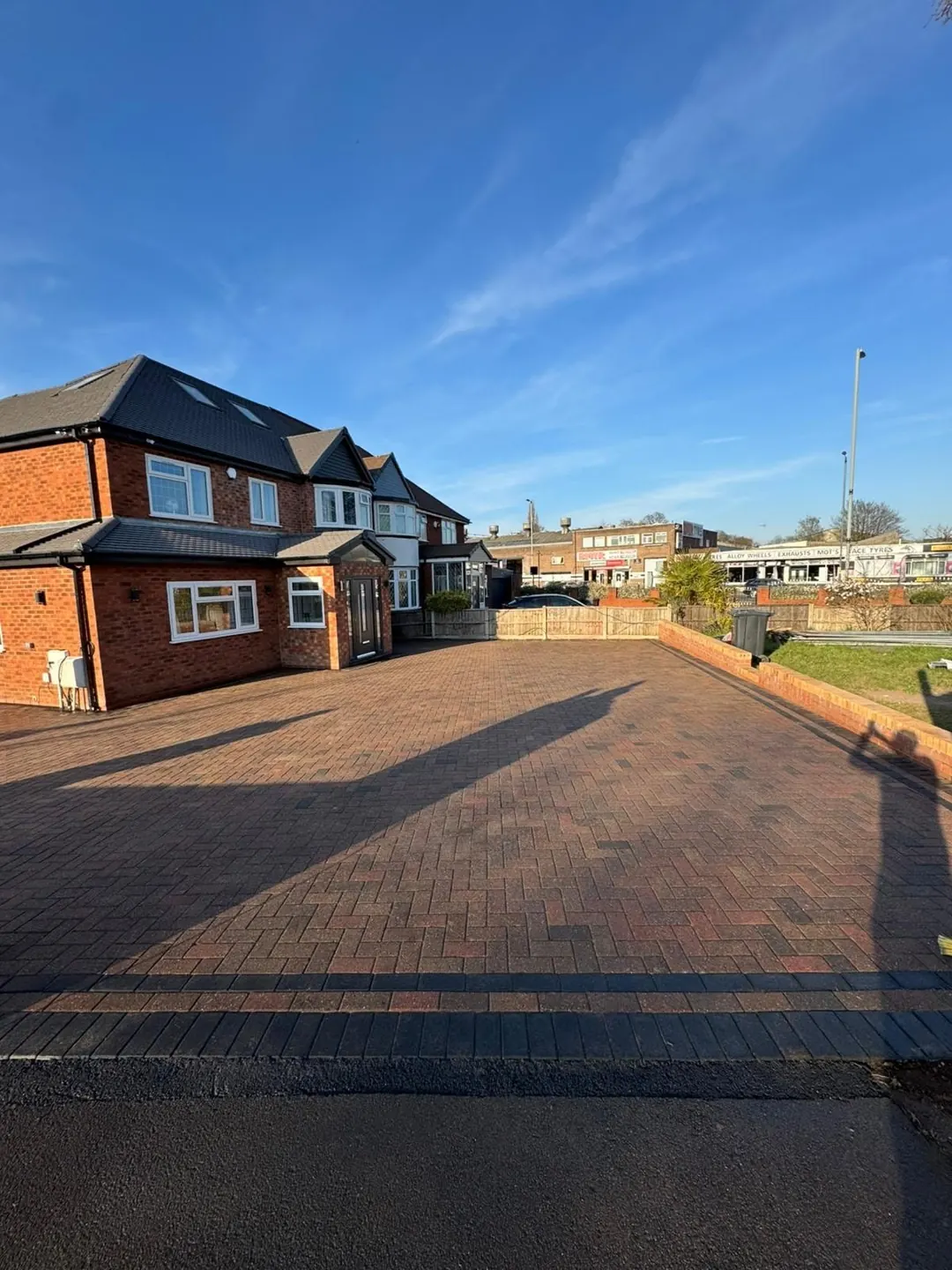
Size and shape of the area
The most obvious factor is the area in square metres. More area means more excavation, more sub-base stone, more surface material and more labour. But shape matters too. A simple rectangle is quicker to set out and lay than a drive with curves, levels, steps or lots of cuts around manhole covers, trees and walls. Every cut piece of paving takes time, and intricate borders or patterns add to that.
It helps to measure the rough length and width before you ask for quotes, and to note anything that interrupts the space: drain covers, meter boxes, steps up to the door, or a change in level between the road and the house.
Excavation and the sub-base
What sits underneath a driveway does most of the work. A driveway that has to carry a car needs the old surface and soft soil dug out, and a properly compacted layer of crushed stone laid in its place. How deep that goes depends on the ground. Clay, soft or previously disturbed soil usually needs more digging and more stone than firm ground.
Removing the old driveway also costs money. Breaking out concrete or old tarmac and taking the waste away (often by skip or grab lorry) can be a significant part of the job, especially where access is tight. If a quote looks very low compared with others, it is worth asking how deep the excavation will be and what sub-base is included, because this is where corners are most often cut and where failures such as sinking and rutting usually start.
Surface material
The surface is the part you see, and the choice changes both the material cost and the labour. Block paving involves laying thousands of individual blocks by hand, so labour is a large share. Resin-bound surfaces are mixed and trowelled on site onto a suitable base. Tarmac needs machinery and is quick to lay over large areas. Gravel is simple to lay but needs edging and a stabilising grid or membrane to stay in place. Natural stone and porcelain are usually used on smaller or more decorative areas.
Within each type there are cheaper and more expensive products, for example the thickness and finish of blocks, or the colour and aggregate of resin. It is worth seeing samples in daylight before deciding. Our guide comparing block paving, resin and tarmac goes through the practical differences in more detail.
Drainage and planning rules
In England, if you surface more than five square metres of a front garden with a material that does not let water through, and the water does not run to a lawn or border within your property, you normally need planning permission. Most people avoid this by using a permeable surface or by building in drainage, such as channel drains or a soakaway. Drainage work adds cost, but it is often a requirement rather than an optional extra.
If you need a new or wider dropped kerb to get onto the drive from the road, that is arranged through your local highways authority and has its own application and cost, separate from the driveway itself.
Edging, access and finishing details
Every driveway needs a solid edge to stop the surface spreading. Kerbs, edging blocks and borders are priced by the metre, so a long drive with a lot of perimeter costs more than a compact square one. Extras such as steps, walls, lighting, planting beds or gates all add to the total.
Access matters as well. If materials and waste have to be moved by wheelbarrow through a side gate rather than delivered straight onto the drive, the job takes longer. A clear, honest quote should break these items down so you can see what you are paying for.
How to get an accurate quote
Ask for a site visit rather than a price over the phone. Be clear about which surface you prefer, whether the old drive needs removing, and whether you need a dropped kerb. Compare quotes on what is included, especially excavation depth, sub-base, drainage and edging, not just the final figure. If you are in Worcestershire or the surrounding area, we are happy to come and look and give you a quote.
Frequently asked questions
Why do driveway quotes vary so much?
Mostly because of what is included below the surface. Excavation depth, the amount of sub-base, drainage and waste removal vary between quotes, and these have a big effect on price and on how long the driveway lasts.
Is it cheaper to lay a new surface over my old driveway?
Sometimes a new surface can go over an existing sound base, which saves on excavation. It depends on the condition and levels of what is there now, so it needs checking on site.
Do I need planning permission for a new driveway?
In England, not usually if the surface is permeable or water drains to a lawn or border on your property. Covering more than five square metres of a front garden with an impermeable surface that drains onto the road normally needs permission.
Does a dropped kerb cost extra?
Yes. A new or extended dropped kerb is applied for through your local council's highways department and is separate from the driveway work.
Related services
More guides
- How Much Does a Patio Cost? The Factors That Set the Price
- Block Paving vs Resin vs Tarmac: Which Driveway Is Best?
- Do You Need Planning Permission for a Driveway?
- How Long Does a New Driveway or Patio Take to Install?
- Dropped Kerbs: Cost Factors and How to Apply
- Porcelain vs Indian Sandstone Patio: Which Should You Choose?
- How Much Does a Plasterer Charge? What Affects the Price
- Landscaping Cost: What Sets the Price of a Garden Project
- Garden Wall Cost: What Affects the Price of a Brick Wall
- Repointing brickwork: a homeowner's guide
- Retaining walls for sloping gardens
- Driveway and patio drainage explained
- Planning garden steps and raised patios
- How long does new plaster take to dry?
- All guides
Related guides
- How Much Does a Patio Cost? The Factors That Set the Price
- Block Paving vs Resin vs Tarmac: Which Driveway Is Best?
- Do You Need Planning Permission for a Driveway?
- How Long Does a New Driveway or Patio Take to Install?