
Short answer: Most domestic patios and driveways take from a few days to around two weeks, depending on size, surface, the amount of excavation, and the weather. The time goes mainly into digging out, building the sub-base and laying the surface. A contractor should give you an expected timescale for your job after seeing the site.
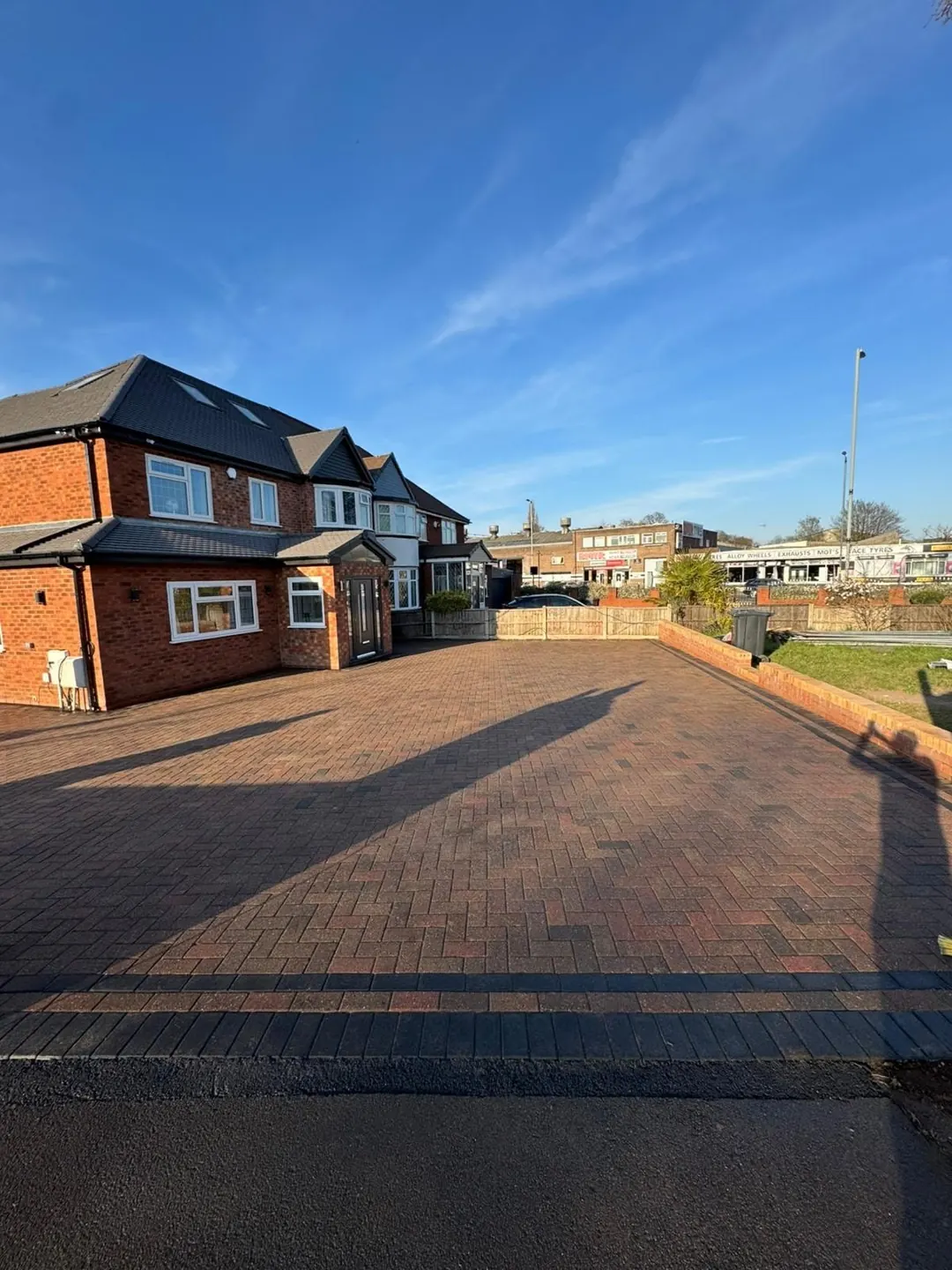
The stages of the job
Whatever the surface, the work follows a similar sequence. First comes setting out and removing the old surface or turf, then excavating to the required depth and taking the waste away. Next is building the sub-base: crushed stone laid in layers and compacted with a plate compactor or roller. Edging and kerbs are set in concrete, and any drainage such as channels or soakaways goes in at this point.
Only then is the surface laid: blocks, slabs, resin, tarmac or gravel. Finally the joints are filled, the area is cleaned, and waste is cleared. The groundwork stages usually take longer than the surface itself, and they are what makes the finished drive or patio last.
What changes the timescale
Size is the obvious factor, but it is not the only one. Breaking out an old concrete drive takes longer than lifting turf. Heavy clay or soft ground may need deeper digging. Sloping sites can need retaining walls or steps. Tight access, where everything moves by wheelbarrow, slows every stage.
The surface matters too. Block paving and patterned slabs are laid piece by piece and cut around edges, which takes time. Tarmac is quick to lay once the base is ready. Resin needs dry weather and suitable temperatures, and porcelain needs careful cutting and priming.
The weather
Heavy rain can stop excavation, turn a site to mud and delay mortar, pointing and resin work. Frost affects mortar and concrete setting. Good contractors plan around the forecast, which occasionally means a day with no work on site so the job is done properly rather than rushed.
When you can use it
Block paving can usually be walked on and driven on soon after the joints are filled and compacted. Patios laid on mortar need time for the bed and pointing to harden before heavy use, often a day or two for foot traffic. Resin-bound surfaces typically need several hours before walking and longer before driving, depending on temperature. Concrete needs the longest. Always follow the advice your installer gives for your specific materials.
How to prepare
Clear the area of cars, pots and furniture before work starts, and plan where you will park if the drive is out of use. Let neighbours know there may be deliveries, a skip or machinery for a few days. Make sure the installer knows where drains, meters and cables run if you know. Agree where materials and waste will be kept, and check whether you need a skip permit if a skip goes on the road.
Typical order of work on the day
On the first day you can usually expect materials to arrive, the area to be marked out and digging to start. Waste leaves by skip or grab lorry as the dig progresses. Once the base is built and compacted, edging goes in and is left to set before the surface is laid against it. The final day is typically spent filling joints, cutting in details, cleaning down and walking the finished job with you. Knowing this sequence makes it easier to plan parking, deliveries and access for the week.
Plan the timing
Spring and summer are the busiest times for driveway and patio work, so it pays to get quotes early if you want the job finished for a particular date. We work across Worcestershire and the surrounding areas; when we quote, we will explain what your job involves and give you an idea of how long it should take. If your timing is fixed, for example around a family event or a house sale, mention it when you first get in touch so it can be factored into the plan from the start.
Frequently asked questions
How long does it take to lay block paving?
It depends on the area, pattern and groundwork. Because blocks are laid by hand, block paving usually takes longer than tarmac or resin on the same size of drive.
How long does it take to build a patio?
A typical garden patio takes from a few days to around a week or more, depending on its size, how much digging and levelling is needed, any steps or walls, and the weather. Mortar also needs time to set before the patio is used heavily.
Can a patio be laid in winter?
Yes, as long as there is no frost or heavy rain when mortar is laid. Work may pause on bad days.
How soon can I drive on a new driveway?
Block paving can often be used soon after completion. Resin and concrete need curing time; your installer should tell you exactly when it is safe.
Do I need to be home while the work is done?
Not usually all the time, but you should be available at the start to agree levels and details, and reachable during the job.
Related services
More guides
- How Much Does a New Driveway Cost? What Drives the Price
- How Much Does a Patio Cost? The Factors That Set the Price
- Block Paving vs Resin vs Tarmac: Which Driveway Is Best?
- Do You Need Planning Permission for a Driveway?
- Dropped Kerbs: Cost Factors and How to Apply
- Porcelain vs Indian Sandstone Patio: Which Should You Choose?
- How Much Does a Plasterer Charge? What Affects the Price
- Landscaping Cost: What Sets the Price of a Garden Project
- Garden Wall Cost: What Affects the Price of a Brick Wall
- Repointing brickwork: a homeowner's guide
- Retaining walls for sloping gardens
- Driveway and patio drainage explained
- Planning garden steps and raised patios
- How long does new plaster take to dry?
- All guides
Related guides
- How Much Does a New Driveway Cost? What Drives the Price
- How Much Does a Patio Cost? The Factors That Set the Price
- Block Paving vs Resin vs Tarmac: Which Driveway Is Best?
- Do You Need Planning Permission for a Driveway?