
Short answer: Choose porcelain if you want a clean, consistent look that resists stains and needs very little upkeep. Choose Indian sandstone if you prefer the natural variation and texture of real stone and are happy to clean and seal it from time to time. Both last well when laid properly, but porcelain needs more careful laying and cutting, while sandstone is more forgiving to work with.
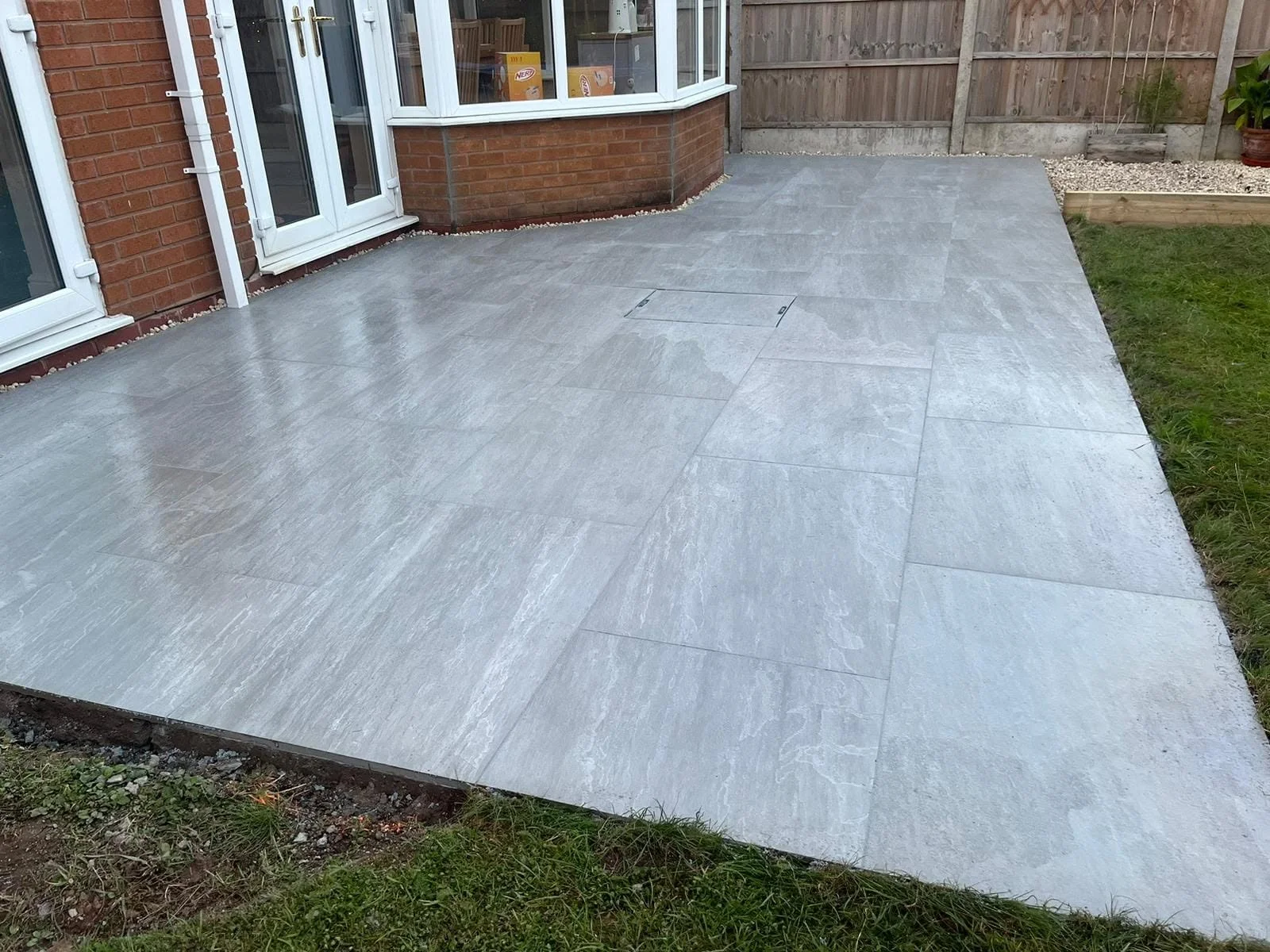
How they look
Indian sandstone is a natural stone quarried and split into slabs. Every slab is slightly different, with shifts in colour, veining and surface texture. Common shades include buff, grey, mint and multi-coloured blends. A riven finish has a rough, layered surface; a sawn finish is flatter with crisp edges and suits more modern gardens.
Porcelain paving is manufactured, so it is far more uniform. Many ranges are printed to resemble stone, slate, concrete or timber, and some do it convincingly. If you want a sharp, contemporary patio with tight joints and matching tones from one end to the other, porcelain is the easier way to get it.
It helps to see both outside rather than in a showroom. Natural light changes how colours read, and a wet slab can look quite different from a dry one.
Upkeep and cleaning
Porcelain has very low water absorption. That means spilled wine, barbecue fat and leaf stains tend to sit on the surface and wipe off, and algae has less to cling to. A brush and occasional wash is usually all it needs.
Sandstone is porous. It soaks up water, so in shaded or damp gardens it can turn green and collect black spots of lichen over time. Many people apply a sealer to reduce staining, and plan a regular clean. Some homeowners like how sandstone weathers and softens; others find the upkeep a chore. Be honest with yourself about which group you fall into.
Grip and safety
A riven sandstone surface gives good natural grip, even when wet. Sawn sandstone is smoother, but still has some texture.
Porcelain varies. Outdoor porcelain is made with a textured surface for grip, but smooth ranges can feel slippery when wet or icy. Check the slip rating for any product you consider, and think about where the patio sits. Steps, shaded corners and areas under trees stay damp longest and benefit from the grippiest surface you can find.
How each is laid
Both should go down on a compacted sub-base with the slabs bedded on a full bed of mortar, not on dabs. Full bedding stops slabs rocking and prevents water collecting in voids underneath, which can cause cracking in cold weather.
Porcelain needs extra care. Because it absorbs so little water, ordinary mortar does not grip it well, so a bonding primer is painted on the back of each slab. It is very hard, so cutting needs proper diamond blades and takes longer. Porcelain is also less forgiving of an uneven base. These steps add labour, which is one reason it can cost more to lay than sandstone.
Sandstone slabs vary in thickness, especially riven ones, so the bed has to be adjusted slab by slab to get a flat finish. Experienced layers are used to this, but it is skilled work.
Durability over time
Laid well, both will last for many years. Porcelain resists fading and frost well and keeps its look. Sandstone is a strong stone but can flake or spall if poor-quality slabs are used or if water sits underneath them through winter. Buying from a reputable supplier and laying on a full bed reduces that risk.
Colour can change on sandstone as it weathers, especially in direct sun. Porcelain colours stay largely the same.
Which suits your garden
Porcelain tends to suit modern homes, low-upkeep gardens, shaded areas prone to algae and anyone who wants the patio to look the same for years. Sandstone tends to suit traditional homes, cottage-style gardens, sunny sites and people who like a natural, slightly rustic finish.
Whichever you choose, the groundwork underneath matters more than the slab on top. Our patio cost guide explains what affects the overall price, including size, preparation, steps and access. When we visit, we can look at your garden's levels, drainage and light and talk through which paving makes sense.
Frequently asked questions
Is porcelain better than Indian sandstone?
Neither is better in every case. Porcelain is lower maintenance and uniform; sandstone is natural, varied and more forgiving to lay.
Does Indian sandstone need sealing?
It is not essential, but many people seal it to reduce staining and make cleaning easier, especially in damp or shaded gardens.
Is porcelain paving slippery?
Outdoor porcelain has a textured surface for grip, but ranges vary. Check the slip rating, particularly for steps and shaded areas.
Why does porcelain cost more to lay?
It needs a bonding primer, careful bedding and harder cutting with diamond blades, all of which take extra time.
Can either be laid on sand?
For a lasting patio, both should be laid on a compacted sub-base with a full mortar bed, not loose sand or mortar dabs.
Related services
More guides
- How Much Does a New Driveway Cost? What Drives the Price
- How Much Does a Patio Cost? The Factors That Set the Price
- Block Paving vs Resin vs Tarmac: Which Driveway Is Best?
- Do You Need Planning Permission for a Driveway?
- How Long Does a New Driveway or Patio Take to Install?
- Dropped Kerbs: Cost Factors and How to Apply
- How Much Does a Plasterer Charge? What Affects the Price
- Landscaping Cost: What Sets the Price of a Garden Project
- Garden Wall Cost: What Affects the Price of a Brick Wall
- Repointing brickwork: a homeowner's guide
- Retaining walls for sloping gardens
- Driveway and patio drainage explained
- Planning garden steps and raised patios
- How long does new plaster take to dry?
- All guides
Related guides
- How Much Does a New Driveway Cost? What Drives the Price
- How Much Does a Patio Cost? The Factors That Set the Price
- Do You Need Planning Permission for a Driveway?
- How Long Does a New Driveway or Patio Take to Install?